
House Sparrow six
Free UK Delivery - Please contact us for European and Rest of world shipping.
The house sparrow is a bird of the sparrow family Passeridae, found in most parts of the world.
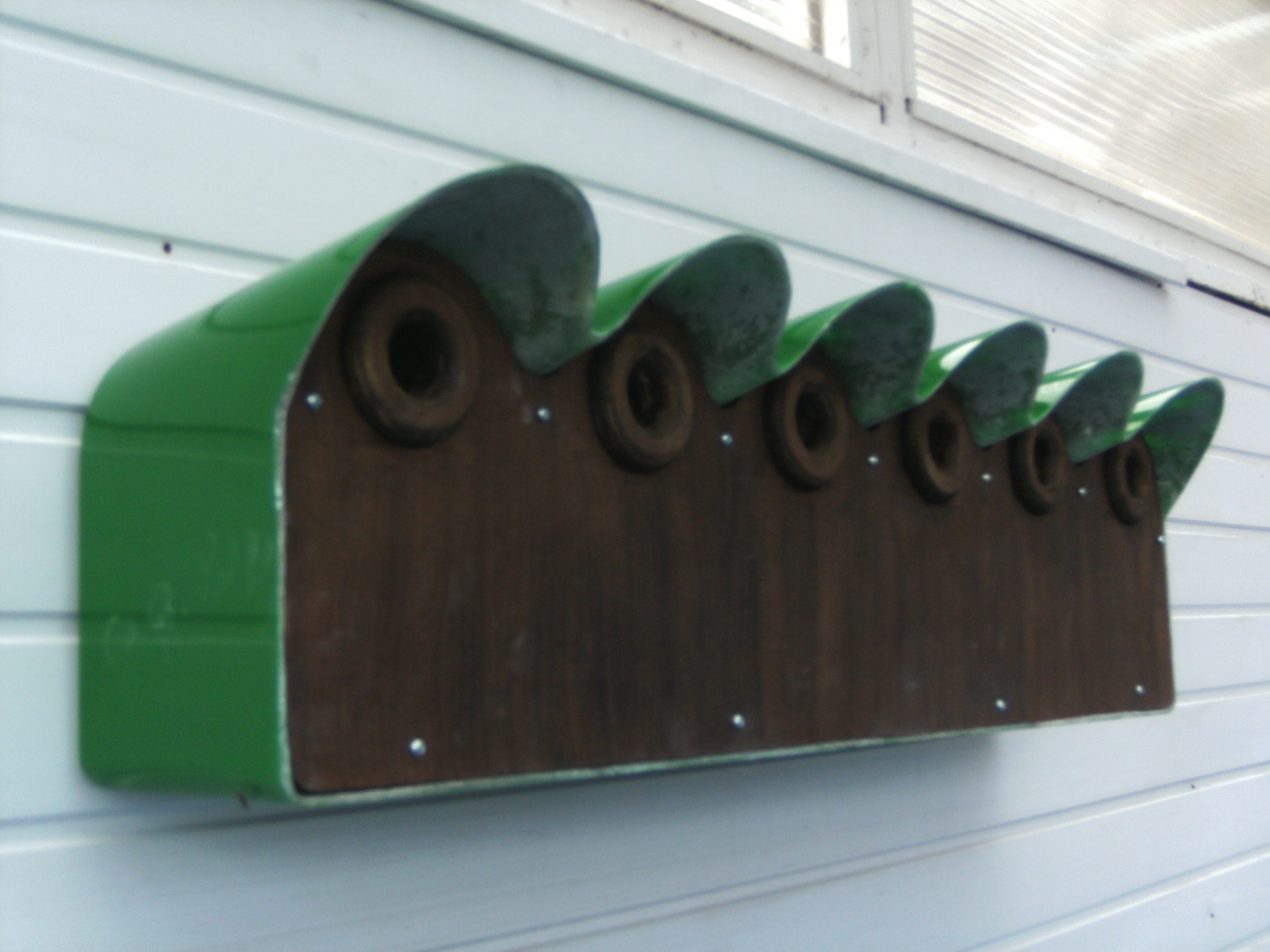
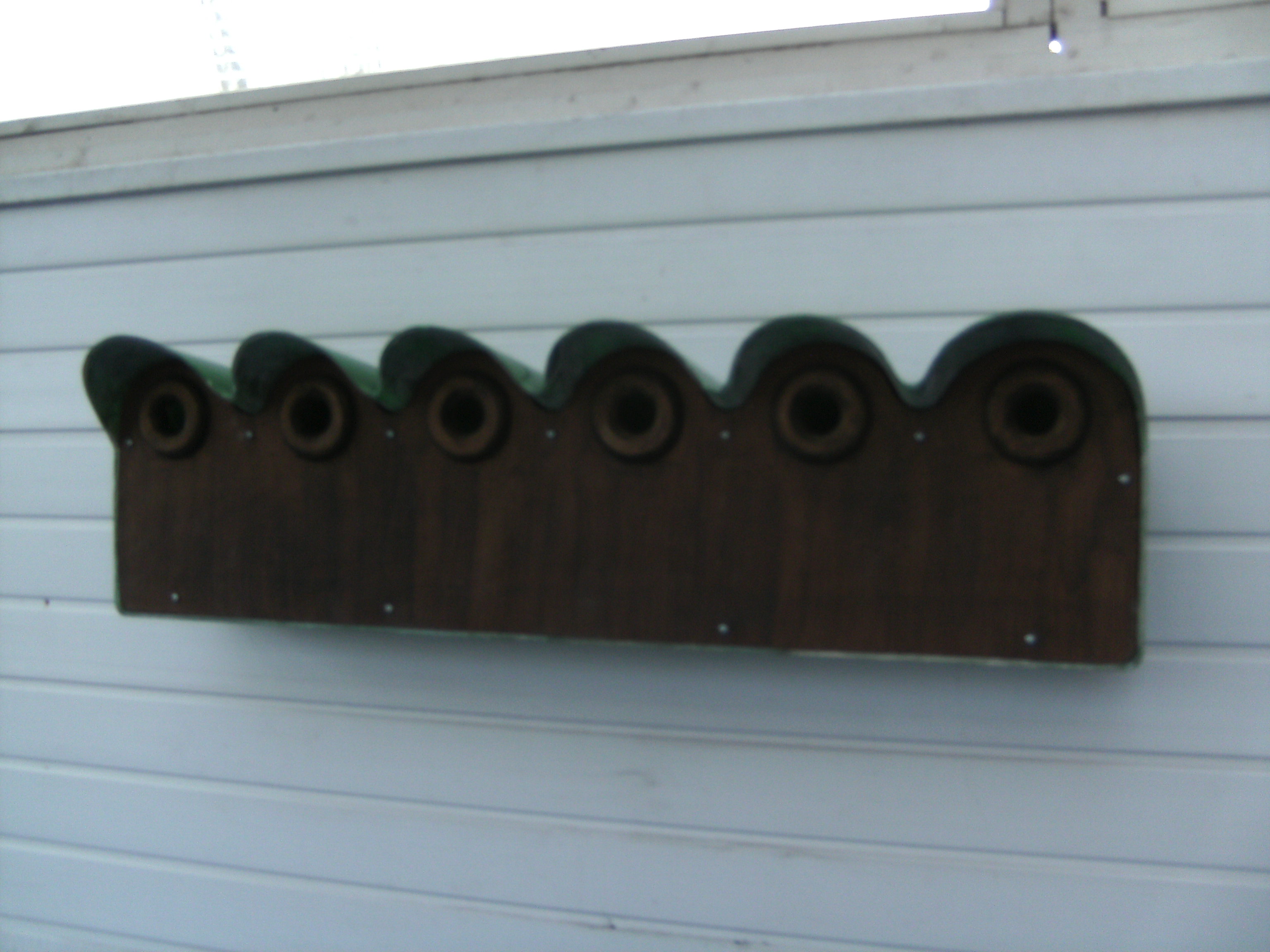
Surely this nest box qualifies as a worthy adornment on any house wall! Sparrows are a very social bird and will nest close to each other.
They have suffered a great reduction in their population numbers over the last 25 years and sorely need our help. If you do not have any
Sparrows nesting near you then it is practical to put up a single Sparrow nest box to get the breeding started, then maybe another to follow.
When you have a breeding pair or two, then is the time to put up one of these Sparrow colony nest boxes with six chambers. They have a 32mm diameter entrance hole and a platform inside the hole. The hooded overhang design ensures a dry entrance. That's one of the advantages of fiberglass construction, another is that they never go rotten like wooden nest boxes so no need to keep replacing them every few years.
Sparrows have a long association with man, even recorded 2000 years ago in the Holy Bible.
Yet in the last 3 decades their numbers have drastically fallen in this country to the extent that they are now a red listed protected species.
Surely if any bird needed human support with additional feeding in our gardens and extra nesting sites then it is the Sparrow.
These birds are gregarious and will readily nest close to each other, so you can put up more than one nest box for them.
Sparrows are sensitive to disturbance at nesting time, so choose the quietest least frequented side of your property to site the box, it is also worth keeping in mind that House Sparrows rear up to four broods per season so it is advisable to leave the nest boxes undisturbed until you clean them out in November.
It is noticeable that in the modern urban garden and house there simply aren’t the holes and cavities available to the SPARROWS even though they are present around your neighbourhood. So you can make the difference by placing some nest boxes for them to rectify the deficit and change their breeding prospects.


